
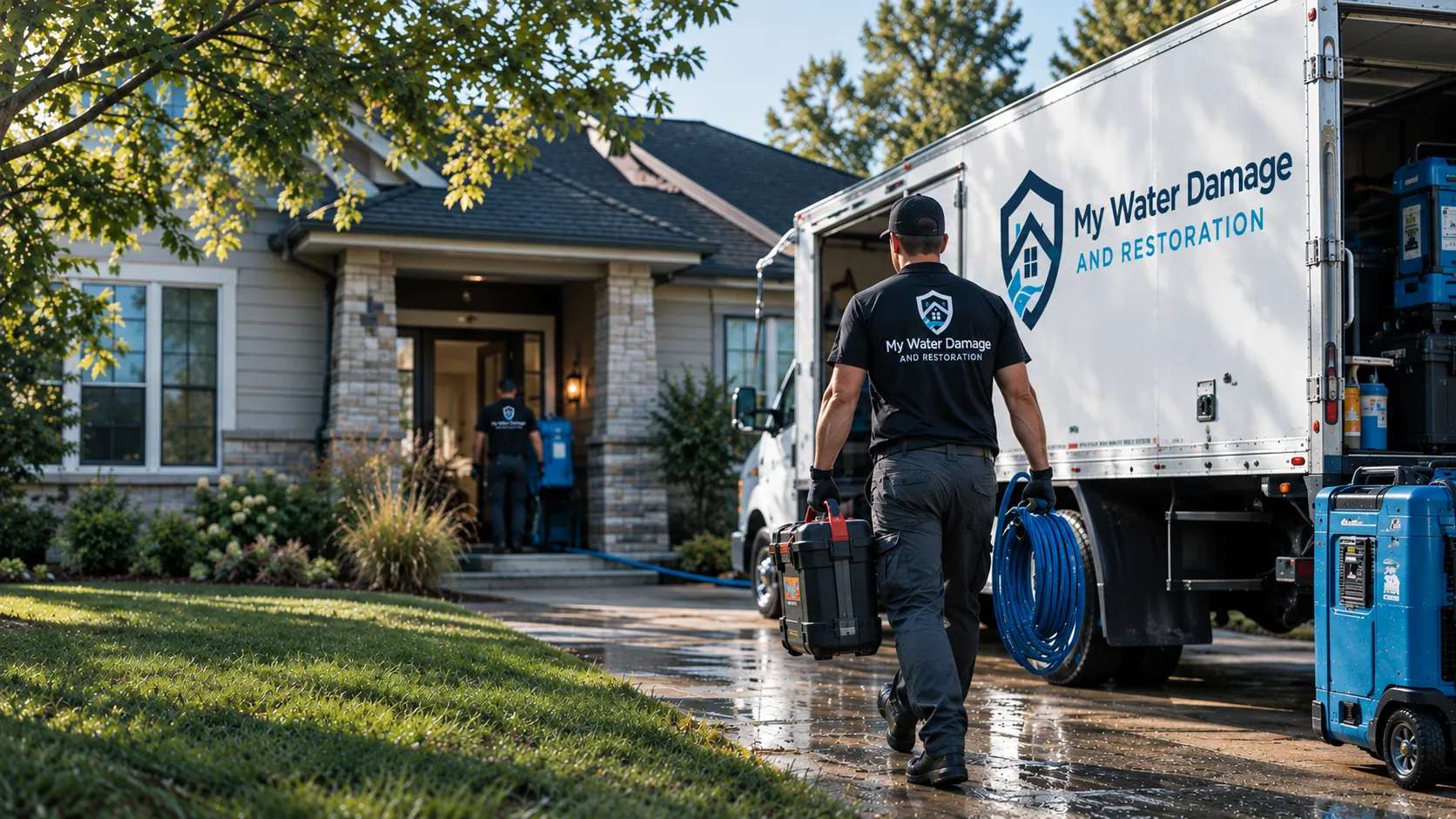
Drying to a Measured Standard
Ward, CO Water Damage Restoration
Water out first. Structure dried to a number second. Rebuild last. That order holds for Ward and the rest of Colorado, and one call reaches an independent local pro.
The scope comes from the visit · no obligation either way
- Calls taken at any hour while water is standing
- Each city routed to contractors working in it
- The contractor who turns up is the one who quotes
- Two estimates compare only once removals and days are itemized
-
Licensed local pros
Contractors licensed for this work in Colorado, matched to your area.
-
Priced from readings
The published standard to hold any contractor to; S520 covers the mold stage of the same job.
-
Answered any hour
Water emergencies answered around the clock, every day of the year.
-
No lead form
One call, quoted by the pro who visits. Your details are not sold on.
Every pro in our network is licensed and insured in Colorado.
- Calls taken at any hour while water is standing
- Each city routed to contractors working in it
- The contractor who turns up is the one who quotes
- Two estimates compare only once removals and days are itemized
A referral line to independent, licensed water damage contractors across the Colorado Front Range, reached on one number.
Call (833) 243-4415
What happens between the call and the rebuild
Four decisions, one order. Elapsed time, materials, the dry-or-remove call, and the coverage question - and each of the four is answerable before anyone quotes.
-
Step 1: The hours that already passed
Price tracks elapsed time more closely than it tracks gallons. Water that stood overnight has moved into the wall cavity and under the floor, and it may have changed category on the way - clean water that has sat in a building long enough is no longer priced as clean water. The size of the job was partly set before anyone was called.
-
Step 2: What it soaked, not how much there was
Materials decide the bill. Water leaves carpet pad and open framing quickly and cheaply; it leaves plaster, hardwood, dense insulation and a concrete slab slowly and expensively, because each of those is either a long equipment run or a tear-out. Two rooms with the same puddle price differently if one is finished in drywall over stud and the other in plaster over lath.
-
Step 3: Dry in place, or come out
This is the largest single fork on the estimate and it is a judgment made with a meter, not a preference. Material that will reach a dry standard inside the equipment's run time is dried; material that will not is removed and replaced. Removal costs demolition, disposal and rebuild; drying costs equipment days and the power to run them.
-
Step 4: Which side of the policy line
Most homeowners policies answer a sudden, accidental discharge differently from gradual seepage, and surface or groundwater flooding is usually a separate matter from either. The cause and the timeline decide it, not the damage, and the policy and the adjuster decide it in the end - not a contractor and not a directory.
What a wet building in Ward asks of a contractor
Ward homeowners reach an independent local contractor for water damage restoration whether the house is downtown or at the city line. Water is hauled and stored up here, so a failed tank does not trickle — it puts its whole contents on the floor at once.
The materials in these houses
Only 6.6 percent of Ward's housing went up after 1989, so the median build year sits at 1938 and the drying scope is set by that era's materials. Buildings at this elevation frequently hold their own water rather than drawing it from a main, in a cistern or tank kept inside where it will not freeze. That stores a large fixed volume above a finished floor, and a tank or a fitting letting go delivers all of it in one event rather than running until somebody closes a valve. There is nothing to shut off, because the water was already in the building.
Weather that sets the pace
April brings 4.67 of the 31.17 inches Ward sees in a normal year, and July averages 55.2 degrees, which is the pace a wet floor dries at in the warm season; rain recorded at Niwot 2.6 miles away and temperatures 2.9 miles away. The tank is indoors precisely because of the season, so the arrangement that causes this loss is the one keeping the supply usable at all. What the long cold adds afterwards is the refill: the building has no water until it is hauled again, and that is a real cost sitting outside any restoration figure.
How the losses here usually end
- Stored water held inside the heated envelope, so a tank failure releases a large fixed volume in one event with no valve to close
- Tanks sited above or beside finished space rather than in a basement, which puts the stored volume directly over the material it will ruin
- No mains supply to fall back on, so the property is without water after the loss and the refill is a separate cost from the drying
Water Damage Restoration services in Ward
Water Damage Restoration puts the call to independent contractors in Ward: extraction, then drying, then the mold stage if the drying stopped short somewhere.
- Emergency
Emergency Water Extraction
Learn more - Priority
Structural Drying & Dehumidification
Learn more - Emergency
Storm & Flood Damage Recovery
Learn more - Priority
Groundwater & Basement Water Intrusion
Learn more - Priority
Ceiling Leak Damage Repair
Learn more - Emergency
Sewage Backup Cleanup
Learn more
Not the right city? Browse all Colorado directories.
Frequently asked questions
The tank failed. Why could nobody just shut the water off?
Because there was nothing upstream to shut. A stored supply is already inside the building, so a tank or fitting letting go releases the contents rather than running from a main. The volume is fixed, which is the one mercy, but all of it arrives before anyone can act.
Does stored water make the loss easier to deal with?
In one respect: it stops on its own, so contact time is shorter than a supply failure that runs unnoticed. Against that, the whole volume arrives at once and spreads further before extraction starts. The scope is set by how far it traveled rather than by how long it ran.
Is the cost of refilling the tank part of the job?
No. Restoration prices drying the structure and replacing what was ruined; restoring the water supply is a separate matter and generally the property owner's own cost. It is worth raising early, because a building with no water is difficult to work in and difficult to live in.
Ward, CO
Water still standing in Ward?
Call once, at no cost, and reach a contractor who can be running equipment today. No obligation either way.
The scope comes from the visit · no obligation either way
One number reaches the referral line for every city on this site. The call is free, there is no form, and nothing about it obliges anyone to book work.
- Calls are answered at any hour; a contractor is routed to the call as local coverage and demand allow.
- Pricing happens on site, after the readings. No figure quoted before a visit is a real figure.
- Ask for the estimate broken into tear-out, drying days, and rebuild - three numbers rather than one.
- A directory routes the call. All work, warranties and pricing sit between the homeowner and the contractor.